

Mid-Year Outlook for 2025: Make Your Own Luck
Without question, the first half of 2025 has been an eventful one. The introduction of DeepSeek in January, to tense trade negotiations in the spring, to stickier inflation, to a U.S. sovereign downgrade, to a U.S. airstrike in Iran in June, have all served as stark reminders that a new world order, including a notable transition from benign globalization to one of great power competition, continues to unfold. For some time, we have been calling this shift in the investment landscape a Regime Change, one in which an investor needs to think differently about where, when, and how to allocate assets, including the changing role of both Alternatives and government bonds in a portfolio. Importantly, though, despite all this perceived turbulence, financial risk assets, especially outside the U.S., have kept climbing, as the overall macro landscape has rewarded those who stuck to our ‘Glass Half Full’ thesis for the past few years. As we look ahead at KKR, we remain positive. To be sure, we expect more market drawdowns than in the past, but our ‘Glass Still Half Full’ thinking is that attractive financial conditions, a global easing cycle, ongoing productivity gains, and lack of net issuance—coupled with some incredibly powerful investment themes—will continue to drive this cycle both further and longer than many think. That said, we do start to want to build in some additional cushion in our approach in 2H25, and as such, we are advocating more allocations that allow investors to ‘Make Their Own Luck’ through, for example, control positions with operational upside in Private Equity, senior slices of Credit amidst wide dispersions, and/or Real Assets with long-dated, inflation-linked contracts that can reprice alongside rising nominal GDP. We also want to harness volatility and uncertainty to our advantage by using any periodic dislocations to lean heavily into our major macro investment themes, including the Security of Everything, Productivity and Worker Retraining, the shift from Capital Heavy to Capital Light, and Collateral-Based Cash Flows. Our bottom line: against a still favorable backdrop for financial markets, we want to tilt our portfolios to gain more exposure to operational leverage stories and macro tailwinds that help us to better control investment outcomes than in the past.
You never know how things are going to change. You’ve got to be ready when they change. And you have to be prepared to get lucky."
Most Important Things to Know
What Has Stayed the Same?
1. Capital markets are responding favorably to a global easing cycle.
2. A stellar technical backdrop has supported/bolstered markets nicely.
3. Despite tariff-induced uncertainty, positive earnings momentum has continued.
4. Our Regime Change thesis for asset allocation remains a high conviction framework at KKR.
5. We think that the KKR Global Institute’s long held belief that the lines between geopolitics, politics, and economics are blurring is only gaining momentum.
What Has Changed?
1. Sustained bigger U.S. deficits may now require a greater ‘term’ premium by investors for owning American assets than we imagined at the start of the year.
2. In addition to growing deficits, the arrival of ‘Liberation Day’ also created a potentially more serious backdrop for U.S. dollar weakness.
3. The speed of change in AI, including the emergence of DeepSeek, as well as the capital flowing into this domain, has been even faster than we imagined.
4. We have even higher conviction in our major investment themes at KKR.
Continue reading the Most Important Things to Know
KKR vs. the Consensus: Variant Perception
Oil prices remain weaker
We remain cautious on oil prices, as the diminishing geopolitical risk premium brings the bearish fundamental backdrop back into focus. Specifically, we expect the oil market to move into larger surpluses over the next six to 12 months, driving WTI oil prices back down to $60 per barrel on average in the second half of 2025 and 2026.
During government deleveraging cycles driven by big deficits, the currency may be more vulnerable than the long end of the curve
When consumer and corporate debt are declining at the same time, our observation is that investor discomfort with wide deficits tends to be expressed through currency weakness, rather than a big surge in government bond yields. As such, we are more inclined to hedge the USD than the back-end of the curve.
Productivity cycles drive markets longer and higher than many think
Our strong belief is that we are in a productivity cycle similar to the 1990s. As such, market selloffs are to be bought, not sold, as the cycle goes on longer. Meanwhile, on the fixed income side, we think higher starting rates mean that credit spreads remain tighter than the consensus now thinks.
Europe will perform better for longer
Valuation differentials between U.S. and European Equities are near historic extremes at a time when the European story may be changing for the better. From our vantage point, we think defense stocks and banks run further, and we think a stronger euro, continued interest in renewables (given such high energy costs), deeper capital markets, and less onerous cross-border restrictions may all work together to make something more structural for investors to get behind than the consensus now thinks.
We think Private Equity will remain a top-performing asset class
Contrary to a popular recent narrative, we do not see secondary PE sales by universities as a harbinger of doom, but rather as a rational response to potential future liquidity needs related to endowment taxation. Private Equity continues to benefit from dispersion and control, allowing investors to lean into operational improvement and accretive M&A activity. Maybe even more importantly, we think PE increasingly offers the most direct route for tapping into a broad universe of high-quality small and midsize companies measured in terms of their margins, stability, and future growth prospects.
Infrastructure: The role of Private Markets in a time of government retrenchment signals a larger than expected opportunity
We think governments across the globe are being challenged simultaneously by historic fiscal constraints, energy transition needs, and geopolitical competition. Private investments have emerged as a critical source of capital across a variety of industries. Just consider the post-pandemic increase in the need for infrastructure, for example, where demand for capital far exceeds what governments can provide to stand up transmission lines, connect data, build supply chain resiliency, and update existing infrastructure.
Changing labor dynamics suggest the unemployment rate stays lower for longer
We are projecting monthly job growth of only 100-110k over the next 18 months, with gains increasingly narrowly concentrated in just a few sectors, including health care and leisure. Importantly, however, this modest payroll backdrop does not imply a significant increase in unemployment rates. In fact, we believe the U.S. may need just 50-100k jobs per month to keep unemployment stable over the long term, as labor force growth slows due to lower immigration and aging demographics.
U.S. markets are reasonably valued, not overvalued
Lower taxes (higher free cash flow), higher margins, and higher quality earnings all suggest the S&P 500 is not at extreme valuations. Even within the Magnificent Seven, companies have negative net debt and high free cash flow conversion.
The technical picture remains much better than investors think
Net issuance of IPOs, Levered Loans, and High Yield remains at levels not seen since 2009. Meanwhile, the Fed’s balance sheet still has holdings that are equal to 24% of GDP. To be sure, today’s level is below the record of 34% of U.S. GDP reached immediately after COVID, but it remains a far cry from the six percent that defined the pre-GFC era.
Key Themes
Download the report for full details, but we have even higher conviction in our key investing themes, including:
-
Security of EverythingThis trend has only accelerated under the Trump administration, where governments, businesses, and individuals now better understand that the reliance on past paradigms can come at the expense of resiliency.
-
Models Transitioning to Capital LightA growing number of public companies are effectively transitioning towards private-like models, not through LBOs, but via disciplined capital allocation.
-
The Loneliness Epidemic, Including Pet Care and FertilitySocial disconnection is increasingly becoming a defining feature of modern life, shaped by demographic shifts and technological disruptions that are transforming societies worldwide.
-
Collateral-Based Cash FlowsOur research continues to show that many individual and institutional investors are still underweight Real Assets, especially Infrastructure, Asset-Based Finance, Real Estate, Credit, and certain parts of Energy, during a time when the need for inflation protection in portfolios remains high.
-
Worker Retraining/ProductivityPresident Trump has espoused a clear shift from strictly academic pathways towards more vocational and technical education, emphasizing the need for worker training and upskilling to meet the demands of a reindustrialized American economy.
-
Public to Private InitiativesWe’re witnessing a profound transformation in the capital formation landscape—one where private capital is increasingly stepping into roles once dominated by governments, many of whom are now over-levered.
-
Intra-Asia ConnectivityIntra-Asia trade—which we see as a mega theme— continues to accelerate and in our view, remains one of the true structural investing stories in the region as the economic landscape is reshaped.
Picks and Pans
We offer our updated asset allocation picks and pans for investors to consider.
Global / Regional Forecasts
We are still seeing positive economic momentum across all the major regions where KKR does business. However, when our team thinks about the speed and durability of that growth, trade tensions are clearly front and center. While we expect the tariff negotiations to remain fluid, one thing is clear: tariffs have evolved. Specifically, what were once seen as temporary negotiating tactics are now becoming embedded features of industrial and geopolitical strategy. We are quite certain that this is no longer the tariff cycle of 2018-2019. Today, tariff regimes are broader, more persistent, and are being used as much to steer capital and assert leverage as to protect domestic producers. This is not unique to President Trump, as the Biden Administration maintained many Trump 1.0 tariffs.

United States

Euro Area

China

Japan
Capital Markets
S&P 500
U.S. Interest Rates
Euro Area Interest Rates
Oil
U.S. Dollar
Frequently Asked Questions
-
What could Europe do to improve its competitive positioning?
-
What is your latest thinking on the individual retirement account?
-
How are you thinking about Relative Value in Credit?
-
What is your outlook for expected returns?
About the Authors

Henry H. McVey
Partner, Head of Global Macro and Asset Allocation and CIO of KKR‘s Balance Sheet Global Macro and Asset Allocation New York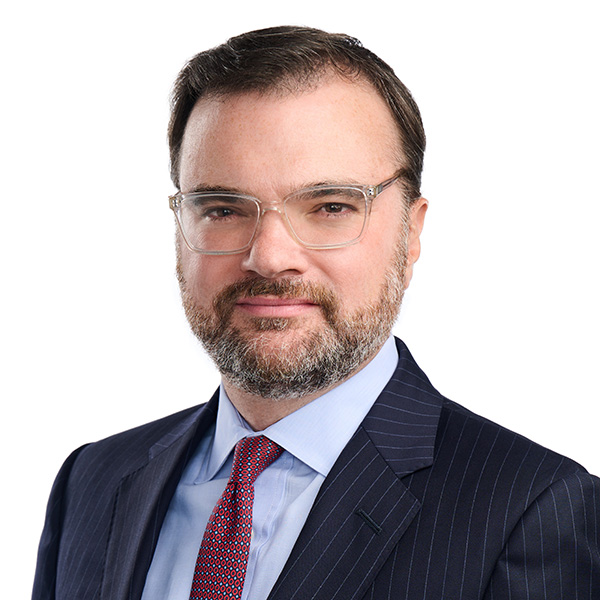
David McNellis
Managing Director, Co-Head of Global Macro, and Head of Portfolio Construction and Multi-Asset Strategies for Private Markets Global Macro and Asset Allocation New York
Aidan T. Corcoran
Managing Director, Co-Head of Global Macro Global Macro and Asset Allocation Dublin
Changchun Hua
Managing Director Global Macro and Asset Allocation Hong KongAcknowledgements
Kristopher Novell, Paula Campbell Roberts, Brian Leung, Rebecca Ramsey, Tony Buckley, Richard Bullock, Bola Okunade, Rachel Li, Thibaud Monmirel, Yifan Zhao, Ezra Max, Miguel Montoya, Asim Ali, Patrycja Koszykowska, Coco Qu, Koontze Jang, Allen Liu, Wayne Shen, Alexandre Caduc, Ernesto Vargas, and Adam Savageau
Sign up to subscribe to the latest insights from KKR
 Please enter a professional email address.